

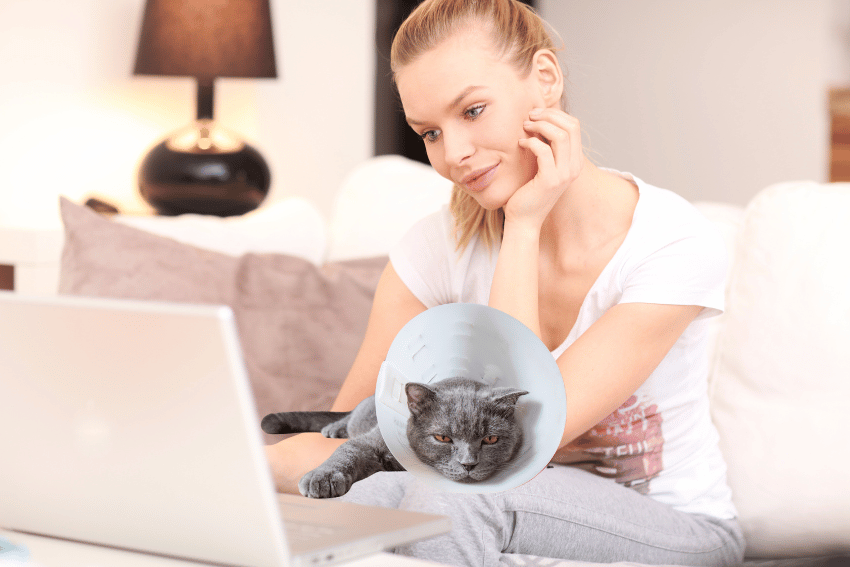
When your pet becomes sick or needs recovery time after surgery, it’s natural to want to stay home and care for them.
Unfortunately Australia’s workplace laws don’t currently recognise pets as family for the purpose of carer’s or sick leave. With 73% of households owning at least one pet, that leaves many Australian Pet Owners of 31.6 million pets, asking what leave they can take—or how to make sure their pet gets the care they need while they’re at work.
This guide explains what the Fair Work Act allows currently, your legal duty of care as a pet owner, and practical options—including how to book affordable trusted pet supervision.
Can I request Annual Leave to care for a pet?
Yes. You can request annual leave to care for your pet – whether it is approved depends on your employer’s discretion and operational needs. If you can’t stay home, you may be able to have a Sitter drop into your Home twice a day to help your pet to drink water and provide you with photo updates. OR, you could drop your pet off at a Pet Sitter’s home for the day. This way, the Sitter can message you with hourly photos and updates while youre at work.
PetCloud helps bridge the gap when you can’t stay home.
👉 Post a Job for Day care or Home Visits today
Can staff request sick leave to care for a pet?
No. Under Australia’s Fair Work Act, pets are not considered immediate family or household members, so employees cannot take personal or carer’s leave to care for a sick pet. However, you can discuss flexible options, such as:
- Using annual leave
- Negotiating a clause in your employment contract for pet-related care
Some workplaces are pet-friendly and may support compassionate arrangements if you communicate openly.

Your Legal Duty of Care as a Pet Owner
All pet owners in Australia have a legal duty of care under the Animal Care and Protection Act 2001 to provide “appropriate care.” This means ensuring:
- Adequate food, water, and shelter
- Access to veterinary care
- Safe handling and conditions
Failure to meet this standard can result in legal penalties for neglect or animal suffering. Even though the law does not provide sick leave for pets, you are still legally responsible for their wellbeing. If you cannot be home, you must make alternate care arrangements.
Your Options When Your Pet Is Sick or Recovering
If your pet requires care but you cannot take time off, here are practical options:
- Hire a Pet Sitter: Post a Job for Home Visits or Pet Day Care Disclose your pet’s condition, recent vet attention, and the level of monitoring needed.
- Vet Clinic Day Care: For uncomplicated, stable pets, expect costs between $250–$400 per day at most veterinary clinics.
- Use Annual Leave: If your role allows, request to use your annual leave to stay home.
- Request a Personal Day: Some workplaces offer personal days that can be used for any reason, including pet care.

Why You Can’t Use Carer’s Leave
- Legal Definition: At the moment, the Fair Work Act only recognises people as immediate family or household members for carer’s leave purposes.
- No Entitlement: Right now, there is no legal entitlement to take carer’s or compassionate leave for pets.
- Alternative Options:
- Discuss flexibility with your employer
- Negotiate a pet-care clause in your contract
- Review your company’s internal policy on personal or compassionate leave
Common Pet Conditions That Require Supervision
Even when medically stable, many pets cannot be left alone safely. Situations include:
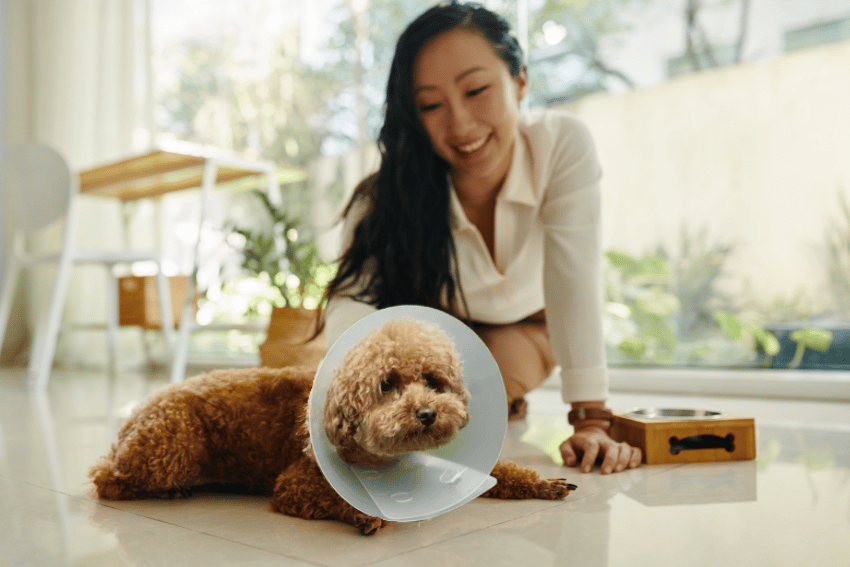
- Post-surgery recovery – especially after desexing, when a pet is wearing a cone over their head to prevent them licking or clawing stitches – they will need the cone removed every 2 hours so they can drink water.
- Wound healing – observation for swelling, infection, or bandage care.
- Medication schedules – timed doses and monitoring for reactions.
- Infectious disease recovery – weak but non-contagious pets needing hydration.
- Seizure disorders – medicated but needing observation for recurrence.
- Diabetes – timed insulin and monitoring for hypoglycemia.
- Respiratory or cardiac disease – stable but requiring watch for distress.
- Digestive issues – supervision for hydration and diet tolerance.
- Post-anesthesia – disoriented or groggy pets needing close monitoring.
- Orthopedic or neurological issues – risk of re-injury or mobility problems.
- Toxin ingestion recovery – post-treatment observation for delayed symptoms.
- Chronic pain or arthritis – monitoring mobility and comfort.