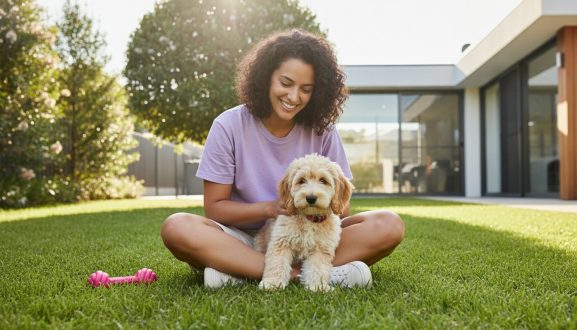


If your dog gets stressed when you leave, finding the right care can feel overwhelming. This guide breaks down every real option — honestly — so you can pick what actually works for your dog.
In this guide
- House Sitting (Sometimes called “In-home pet sitting” where a Carer comes to your home)
- Pet Boarding (your dog stays with a carer)
- Traditional boarding kennels
- Doggy day care
- A trusted friend or family member
- A local dog-loving neighbour or community connection
- Quick comparison table
- Frequently asked questions
Anxious dogs are not “bad” dogs. They are dogs who feel safe in their routines and with their people. Putting them in the wrong care situation can make anxiety worse — but the right option can actually help. Let’s go through each one.
House Sitting (Sometimes called “In-home pet sitting” where a Carer comes to your home)
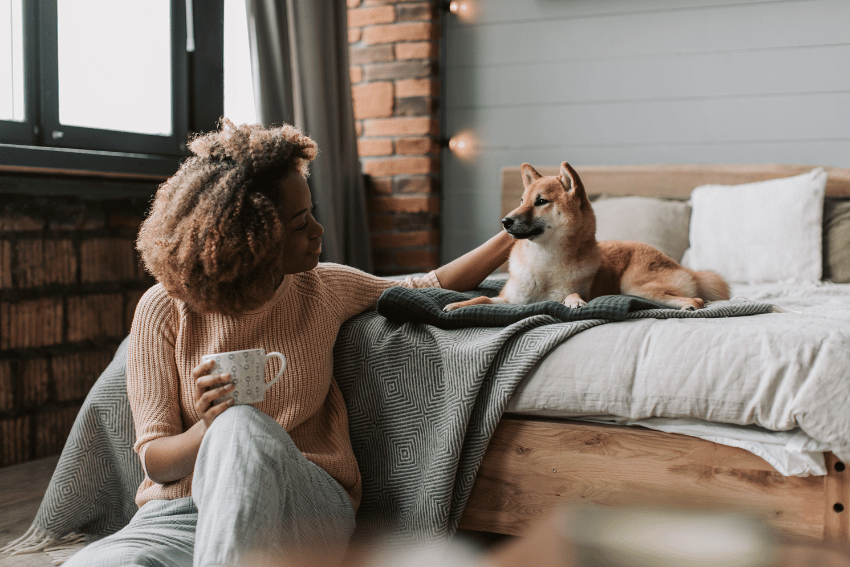
This is usually the gold standard for anxious dogs. Your dog stays in their own home, sleeps in their own bed, and eats from their own bowl. The only thing that changes is that a trusted carer is there instead of you.
Platforms like PetCloud let you search for police-checked, biometrically verified pet sitters in your suburb. Every sitter has passed a National Police Check through Australia’s Document Verification Service — the same system used by schools and aged care providers. It’s not just a tick box. You can also read verified reviews and message your sitter before you book.
TrustedHouseSitters, Mad Paws and Pawshake have sitters who offer in-home pet sitting and may be worth comparing. Mad Paws has some sitters across Australian cities. Pawshake has individuals listed. Neither currently requires biometric identity verification, police checks, or vet-endorsed training at the same level as PetCloud, but both carry host guarantees.
Why it works
- Dog stays in familiar surroundings
- Normal feeding and sleep routine
- One-on-one attention
- No travel stress for your dog
- You can share detailed care notes
Watch out for
- Can cost more than kennels
- You need to trust someone in your home
- Less available in very rural areas
- Quality varies between sitters
Best for
Dogs with separation anxiety, older dogs, dogs with health issues or special diets, and any dog that gets very distressed in new environments. Also great for multi-pet households where moving everyone is a logistical nightmare.
Pet Boarding — your dog stays at the carer’s home
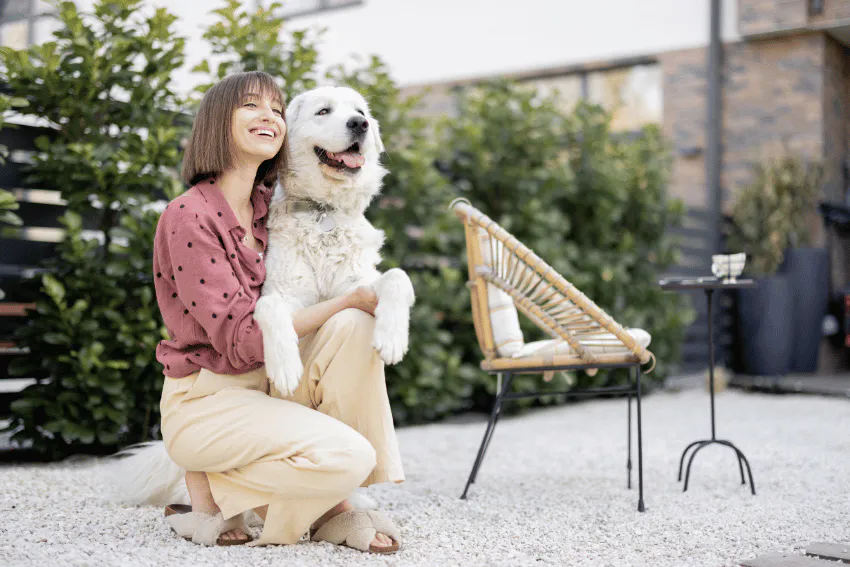
Your dog moves into the carer’s home for the duration of your trip. A good home boarder treats your dog as part of the family — they hang out on the couch, go for walks in a new neighbourhood, and get personalised attention.
This is a solid step up from kennels for anxious dogs, because it’s still a home environment. PetCloud lists verified home boarders across Brisbane, Sydney, Melbourne, Perth, Adelaide, and regional areas. Mad Paws and Pawshake also have home boarding networks.
The key is doing a meet-and-greet beforehand. A good carer will welcome this. If a carer skips this step, that’s a red flag.
Why it works
- Domestic, calm environment
- Personal attention from one carer
- Often cheaper than in-home sitting
- Your dog gets company all day
Watch out for
- New smells, sounds, other animals
- Some carers take multiple dogs
- Your dog has to adapt to a new space
- Quality varies a lot between carers
Best for
Sociable anxious dogs who do okay with new places but struggle when left alone. Also good for dogs who would be bored or lonely with just one overnight check-in visit. Ask the carer upfront: “Will my dog be the only dog staying?”
Traditional boarding kennels
Boarding kennels are the most well-known option. Your dog has their own run or pen, with set feeding times and regular exercise. Staff are usually experienced and some kennels are genuinely excellent.
The honest truth, though, is that kennels are hard for anxious dogs. The sounds of other dogs barking, the unfamiliar smells, and the lack of one-on-one time can spike anxiety levels. Some dogs spend the whole stay in a state of stress.
That said, some dogs actually do fine in kennels — especially if they’ve been going since puppyhood and the staff know them well. Premium boutique facilities that offer one-on-one time and enrichment activities are a much better choice than a basic concrete run. Other options like Hanrob Pet Hotels could be worth considering.
Why it works
- Licensed and regulated facilities
- Staff on site 24/7 at good kennels
- Clear structure and routine
- Vet access sometimes on-site
Watch out for
- Noisy and stimulating environments
- Little individual attention
- Can be traumatic for anxious dogs
- Big price range in quality
Best for
Dogs who have been to kennels before and handled it well, or confident dogs who are social with other animals. Not recommended as a first-time experience for a dog who already shows anxiety signs at home.
Vet tip
If your dog has severe anxiety, talk to your vet before any boarding stay. Short-term anti-anxiety medication during a boarding stay can sometimes make the difference between a dog who copes and a dog who doesn’t eat for three days.
Doggy day care
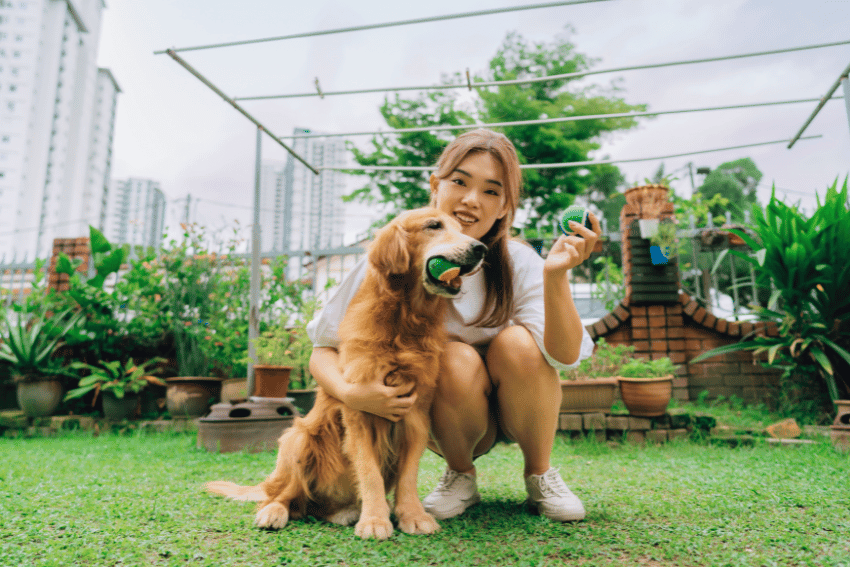
Doggy day care is drop-off care during the day — your dog comes home at night. It’s not a boarding solution on its own, but it’s worth knowing about for anxious dogs because it can actually help build confidence over time.
A well-run day care gives your dog structured socialisation, playtime, and rest. Local independent centres and pet care chains exist across most Australian capitals. Some pet sitters on PetCloud also offer drop-in visits and day care, which is a flexible middle ground.
The catch: busy, noisy day cares can overwhelm dogs who are already anxious. Look for centres that do a temperament assessment first and group dogs by size and energy level.
Why it works
- Dog comes home each night
- Great for dogs anxious about being alone
- Can build social confidence over time
- Useful alongside in-home sitting
Watch out for
- Not a full boarding solution
- Overwhelming for shy dogs
- Can spread kennel cough and illness
- Quality varies enormously
Best for
Dogs with separation anxiety who are fine with other dogs. Also great as a regular routine to get your dog used to being away from you before a longer trip. Combine with in-home sitting at night for a complete short-trip solution.
A trusted friend or family member
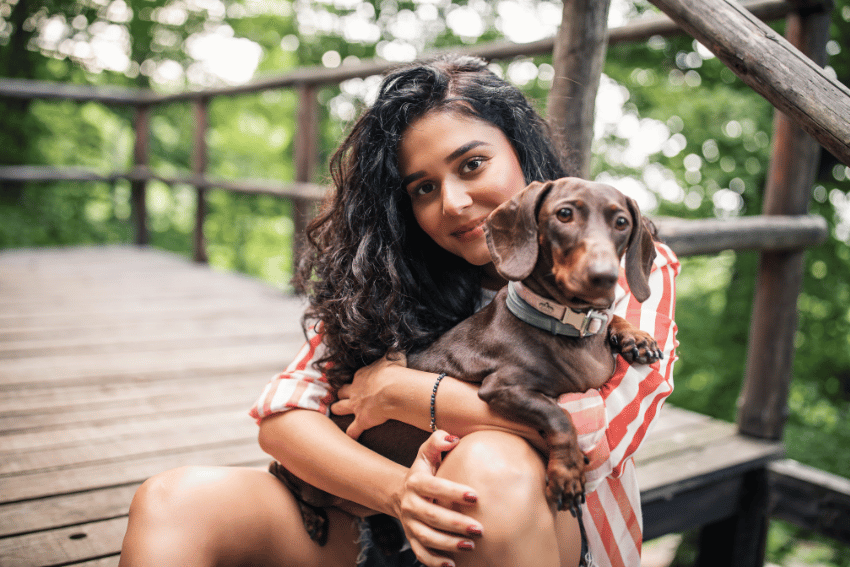
If you have a family member or close friend your dog already knows and loves, this is often the best option of all — especially for anxious dogs. The dog recognises the person, feels safer, and the carer already knows the dog’s quirks.
The problem is that not everyone has this option available, and even when they do, relying on a friend for a two-week holiday is a big ask. It can also put strain on relationships if something goes wrong — a dog being sick, escaping, or refusing to eat.
Why it works
- Dog already trusts the person
- Flexible and personal
- Usually free or a token gesture
- You can give detailed instructions
Watch out for
- Not always available when you need them
- No backup if they get sick
- Can strain friendships
- No formal pet care training
Best for
Short trips where a familiar person is willing and available. Works beautifully for anxious dogs who already have a bond with that person. For longer trips, it’s worth having a backup plan through a platform like PetCloud in case your friend’s situation changes.
A local dog-loving neighbour or community connection
Facebook groups like “Brisbane Dog Lovers” or local neighbourhood apps sometimes surface dog lovers willing to help out informally. Some are fantastic. Some are not.
The big risk here is no vetting, no insurance, and no accountability. If something goes wrong — and things do sometimes go wrong — there’s no platform standing behind the care. This matters most for anxious dogs who may need calm, experienced handling.
If you do go this route, treat it like a job interview. Ask about their experience, check their home, and meet them with your dog first. And always consider using a verified platform for insurance coverage — it’s there for a reason.
Why it works
- Very close to home — minimal travel for your dog
- Often flexible and available short notice
- Dog may already know the neighbour
Watch out for
- No police checks or vetting
- No insurance if something goes wrong
- No formal backup plan
- Can become awkward if there’s an issue
Best for
Very short, low-stakes situations — a quick trip or half-day absence — where you already know the neighbour well and your dog is comfortable with them. For longer stays or dogs with significant anxiety, a verified platform is the safer choice.
Not sure which option fits? Try this quick check
What does your dog do when you leave the house?
Quick comparison at a glance
| Option | Good for anxiety? | Home setting? | Police checked & vet-endorsed trained carers? | Approx. cost |
|---|---|---|---|---|
| House Sitting (PetCloud) | ✓✓ Excellent | ✓ Your home | ✓ Police-checked, biometric + vet-endorsed training | $60–$120/night |
| House Sitting (Mad Paws / Pawshake) | ~ Mixed | ✓ Your home | ~ Platform-verified, varies | $50–$110/night |
| Home boarding (any platform) | ✓ Good | ✓ Carer’s home | ~ Platform-dependent | $40–$85/night |
| Traditional kennel | ✗ Often hard | ✗ Commercial facility | ✓ Licensed facility | $35–$80/night |
| Doggy day care | ~ Mixed | ✗ Day care centre | ~ Business regulated | $40–$75/day |
| Friend or family | ✓✓ If known to dog | ✓ Domestic | ✗ No formal vetting | Free – gift |
| Neighbour / community | ~ Varies | ✓ Domestic | ✗ No vetting | Free – low |
Frequently asked questions
Try working backwards. If you came home to find your pet had been injured, gone missing, or died in someone’s care — would you wish you had booked a sitter who had been police-checked? Almost certainly yes.
A police check isn’t a guarantee that nothing in future will go wrong. But it does tell you something important: that the person has no serious criminal history. That matters when someone has unsupervised access to your home and your pets for days at a time.
Critically, a police check must be accompanied by a live biometric check cross-referenced with the Government’s Document Verification Service (DVS) system. Without this, there is no way to confirm that the person standing in front of you — or creating an account online — is actually the person named on the police check document.
Ask yourself three questions before booking any pet sitter: Are they who they say they are? If something goes wrong, can I hold them accountable? And do they have the knowledge to prevent an accident or escape in the first place? If you can’t answer yes to all three, that’s a risk worth thinking carefully about.
This is a really important question — and the honest answer is: a document someone hands you is no longer enough.
According to the Australian Cyber Security Centre, cybercrime reports in Australia have surged in recent years, with fraud and identity crime among the fastest-growing categories. Artificial intelligence tools now make it straightforward to generate realistic-looking documents — including fake police checks — in minutes. A PDF someone emails you, or shows you on a phone screen, can be fabricated with no technical skill at all.
This is exactly why live biometric verification matters. PetCloud verifies sitter identity through Australia’s Document Verification Service, which cross-checks identity documents against government records in real time. It’s the same infrastructure used by banks and government agencies — not a static document that can be copied or altered. When a marketplace onboards sitters remotely without this kind of live check, anyone can upload a fake document and create an account.
A real-world example: in a case covered by A Current Affair, an Australian pet owner named Will paid for a pet sitter named Isabel to look after his pets Sadie and Bambi while he was on holiday. When he returned home, he claims thousands of dollars worth of belongings were missing. He only found out the full picture when he reviewed his home camera footage. Watch the A Current Affair story here. Cases like this are a reminder that knowing who is in your home is not a nice-to-have.
Yes — and here’s why. Pet sitting platforms sign up carers remotely. There is no face-to-face meeting with the company. Without a live biometric check, the platform has no way of confirming that the person creating the account is the same person whose documents were uploaded.
Anyone can scan someone else’s ID. Anyone can upload a photo. But a live biometric check — where the system captures your face in real time and matches it to the identity document — cannot be faked with a stolen photo or a copied document.
This is the standard PetCloud holds its sitters to. It is the same standard used by financial institutions when opening bank accounts online. For something as personal as handing over your home and your pets, that level of verification is not excessive — it is the minimum that makes sense.
Consider what can go wrong when someone without proper pet care training looks after an animal. In a case reported by the Daily Mail, a pet owner left their pug Otis with a sitter and returned to find the dog had suffered a serious injury — the sitter was later charged with animal cruelty. Read the Daily Mail report here.
Vet-endorsed training covers things most people wouldn’t think to ask about: how to recognise signs of distress, what to do in a medical emergency, how to safely handle an anxious or reactive dog, how to prevent escapes, and when to call a vet. This isn’t about being overly cautious — it’s about giving your pet the same standard of care you would expect from anyone looking after a vulnerable family member.
PetCloud‘s Academy training is endorsed by a veterinarian. Completing it signals that a sitter has taken their responsibility seriously — not just shown up with a love of dogs.
They can be severe — and they go well beyond an inconvenient holiday.
Emotional: Losing a pet while you’re away, or returning to find your dog traumatised and shut down, is genuinely devastating. Pet owners describe it as a grief that is hard to explain to people who haven’t experienced it. The guilt of having chosen the wrong carer can linger for years.
Financial: Emergency vet bills for an injured or sick dog can run into thousands of dollars. If belongings are stolen from your home — as in the A Current Affair case above — that adds another layer of financial loss on top of the emotional one. Disputes over who is responsible are much harder to resolve when there is no formal booking, no verified identity, and no platform standing behind the arrangement.
Accountability: If you book through a verified platform with identity-checked carers, you have a paper trail, a booking record, and a company with a formal complaints process. If you booked through a Facebook group or a casual arrangement, holding someone accountable — legally or otherwise — becomes very difficult very quickly. Before you book anyone, ask yourself: if something goes wrong, how will I be able to hold this person accountable? The answer to that question should heavily influence your decision.
Yes — and research consistently backs this up. Third-party accountability plays a critical role in the quality of care delivered by pet sitters and dog walkers. When an external body sets standards, monitors compliance, and can act on complaints, sitters have a concrete reason to perform at a higher level. It is not about distrust — it is about human nature.
When that external pressure is removed, three things tend to happen. First, the incentive for compliance drops — if no one is checking, corners get cut. Second, internal standards naturally drift lower over time without an objective benchmark to measure against. Third, the sitter becomes the only judge of whether they are doing a good job, which is rarely a reliable measure.
Think about how this works in other industries. Restaurants are inspected by food safety authorities — not because every restaurant owner wants to poison their customers, but because objective oversight keeps standards high across the board. Aged care facilities are audited. Childcare centres are accredited. The same logic applies to anyone looking after a living creature in your absence.
A platform that requires police checks, biometric identity verification, vet-endorsed training, and verified reviews is applying that same external pressure. A casual arrangement with someone from a community group has none of it. When you are comparing your options, the presence or absence of that accountability layer is one of the most important differences — even if it is one of the least visible ones.
Yes. We have led the industry in putting pet safety and welfare first by always insisting every booking has a Meet & Greet well in advance of the stay.
This article is for general information only. Every dog is different. For dogs with severe anxiety or health conditions, please speak with your vet before making boarding arrangements. PetCloud is an Australian pet care marketplace connecting pet owners with police-checked, verified sitters and dog walkers across Australia.